What’s Happening with the ISO9001 Draft?
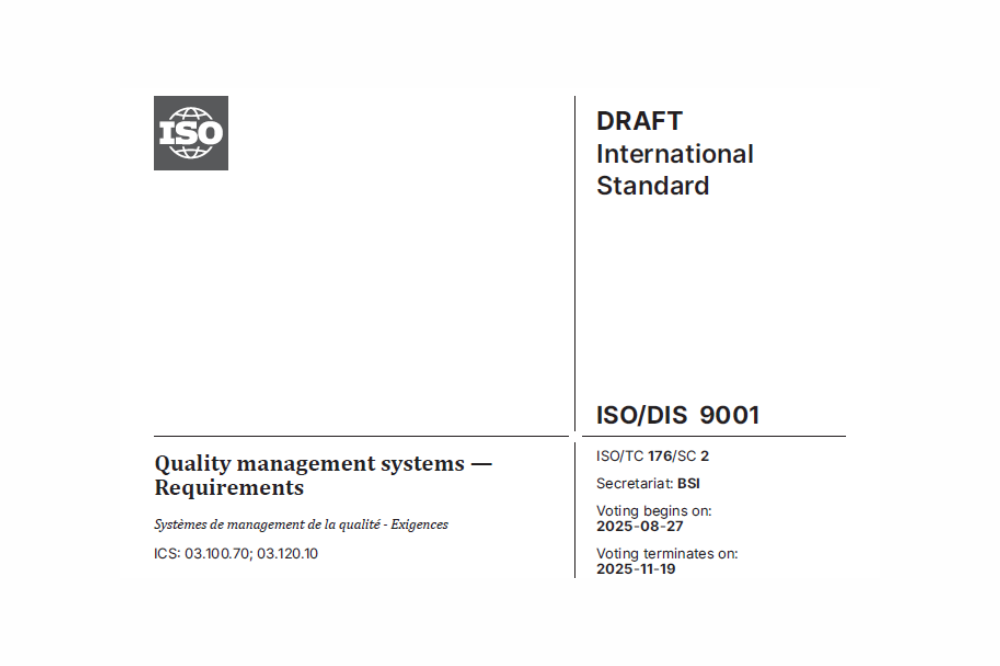
Earlier this year I wrote about the ISO9001 review process and how ISO9001 stays relevant in today’s business environment. The review process is in motion and the Draft International Standard (DIS) was published in August. Here are 6 changes included in the DIS.
1. Harmonized Structure
Management System Standards follow what’s known as the Harmonized Structure. This is a common format and verbiage shared among those standards. As revisions are made to the standards, they are aligned with the current version of the harmonized structure. This resulted in some rearrangement of bullet points throughout the DIS.
2. Climate Change
In February 2024 a climate change amendment was added for clauses 4.1 and 4.2. As an amendment this became a requirement of ISO9001:2015. This amendment has been incorporated into the DIS.
3. Quality Culture and Ethical Behavior
Promotion of quality culture and ethical behavior was added in the leadership and awareness sections. This is new to ISO9001 but does exist in other standards such as the aerospace standard so there is precedent for this in ISO standards.
4. Risks and Opportunities
Risks and opportunities have been separated in recognition that they may be approached differently. Also, there is clarification that risks are undesirable effects while opportunities are desirable effects.
5. Planning of Changes
Three additional bullets were added to this section covering:
- monitoring and evaluating effectiveness of changes
- communication of changes
- reviewing results of changes
These are all aspects of a robust change management process; however, they were not previously included in the ISO9001 planning of changes clause.
6. Management Review
Clause 4.2 already requires organizations to understand the needs and expectations of interested parties and to monitor and review that information. The DIS adds review of needs and expectations of interested parties to the management review clause.
What’s Next?
This is not the final version so there may still be changes. It’s a little early to make updates to be in compliance with the new version, but you can still prepare. Evaluate how well your organization meets the requirements of the current version. Do a gap assessment or other comprehensive review of your system then prioritize and address any gaps before the new version is published. The more effective your Quality Management System is today, the easier it will be to make any adjustments to meet new requirements.
Here’s a link to our free gap assessment to get you started. Take proactive action now so you are ready for the changes coming next year!